
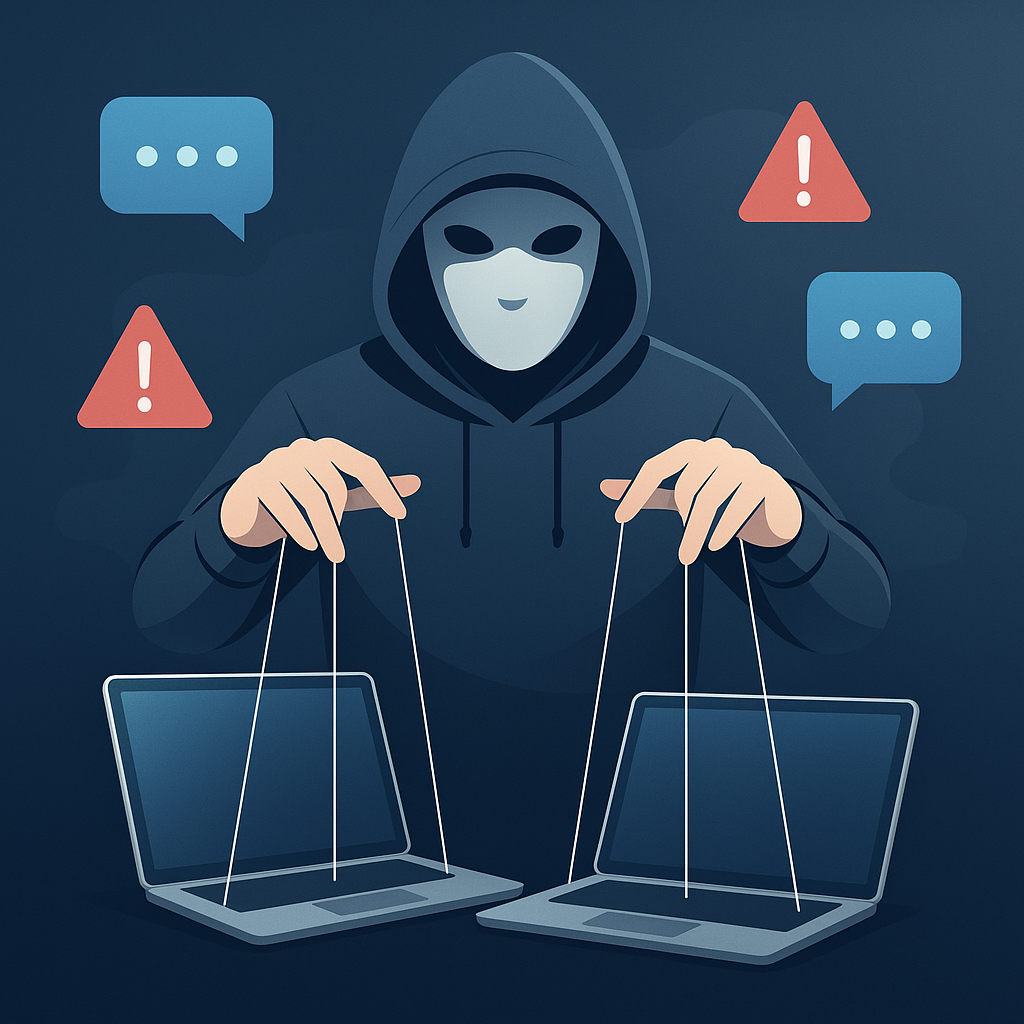
Modern Social Engineering: New Tricks Threat Actors Use in 2025
Gone are the days of poorly written phishing emails. In 2025, threat actors use sophisticated tactics and technology to manipulate and deceive even the most vigilant employees.
What’s Changed?
Today’s social engineering is more personalized, persistent, and hard to detect. Cybercriminals study targets on social media, leverage deepfake audio, and use AI to craft believable stories.
Emerging Techniques:
-
Deepfake Voice & Video Calls
Attackers impersonate executives or colleagues with realistic AI-generated voices and videos, tricking staff into transferring money or sharing sensitive data.
-
Contextual Phishing (“Smishing” & “Vishing”)
Phishing messages now arrive via SMS, WhatsApp, or even voice calls—often using details from public profiles to appear legitimate.
-
Business Email Compromise 2.0
Fraudsters hack or spoof email threads, inserting themselves seamlessly into ongoing business conversations.
-
QR Code Traps
Malicious QR codes are left in public places or sent in emails, leading to fake login pages or malware downloads.
How to Stay Safe
-
Verify requests: Always double-check unusual requests—even if they seem urgent or familiar.
-
Slow down: Threat actors rely on pressure and urgency. Pause, think, and confirm.
-
Stay updated: Regular security awareness training is your best defense.
Stay Ahead of Modern Social Engineering—Train Your Team for Free with Cybernack!
Threat actors are evolving, and so should your defenses. Equip your employees with the latest knowledge to recognize and counter social engineering tactics in 2025. Join Cybernack’s free platform today and empower your team with essential cybersecurity training.